Product Details:
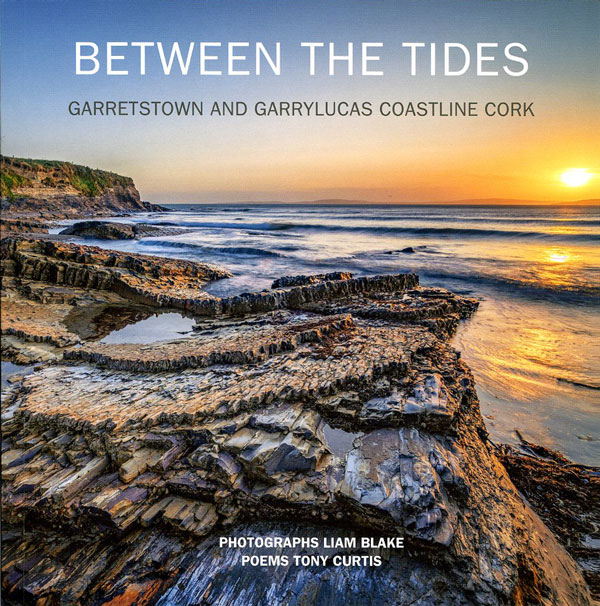
Between The Tides
Brand: Real Ireland
64 page book, square format 165mm x 165mm, full colour.
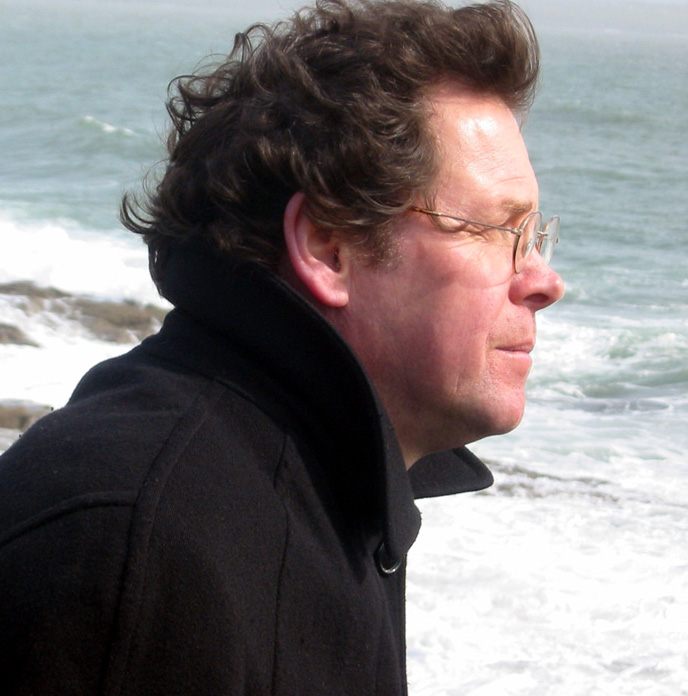
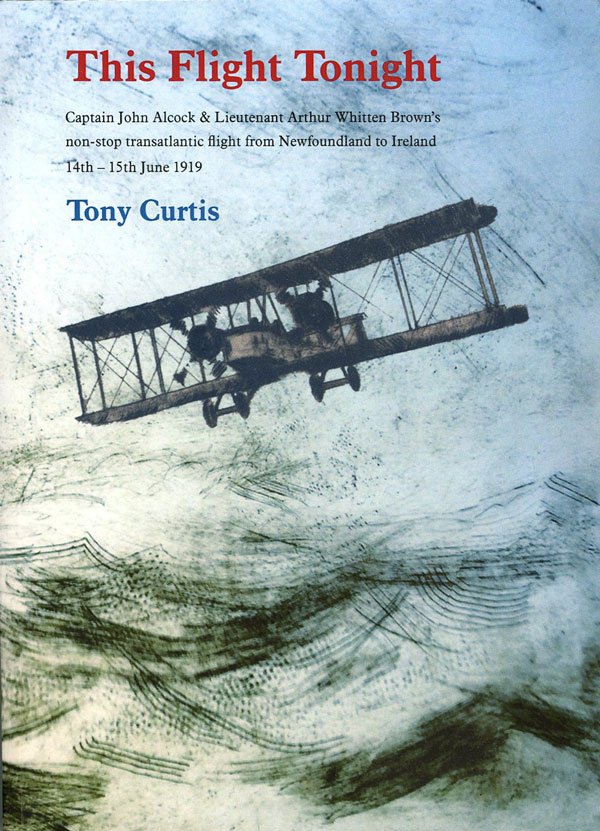
Liam has asked me to write a few lines about why I chose to write twenty-four poems about great women poets in response to these wonderful photographs. For a start, you should know that Liam and I have made two previous books together: Sand Works and Aran Currach. For Sand Works I wrote forty-five haiku; a Japanese form of three line nature poems incorporating just seventeen syllables 5-7-5. For Aran Currach I wrote a string of haiku and tanka: five line nature poems using just thirty-one syllables 5 -7-5-7-7. For this book, I carried Liam's photographs in my bag for over a year. At the time, I was immersed in making poems for a book called This Flight Tonight. It was a book about Alcock and Brown's transatlantic flight, in June 1919, from St. John's, Newfoundland to a bog in the west of Ireland; undoubtedly the greatest flight of all time. Often when the writing stalled or I was looking for the way forward, I would sit on the beach and look at Liam's photographs. So it was a slow process that involved a lot of looking.
Of course, there is always a way into poems, and the way into these poems came with a gift I received from my American friends, Anne and Philip McCracken: a copy of \W.S. Mcrwin's last book Garden Time. These late poems were free flowing glimpses of life, using no punctuation, just lines turning on a breath falling over the page like waves. While I was reading Mcrwin's book, I was chipping away at commas and colons in the 300 pages of proofs for my book This Flight Tonight. So you can sec why I was drawn more and more to the freedom, simplicity and flow of Mcrwin's last poems.
The original title for this set of photographs was Rock of Ages. We thought about this title for a long time but in the end decided that it carried too many connotations — humorous, religious. Putting all this together, I can now see that the poems in this book came from me looking at Liam's photographs for over a year; Mcrwin's poems washing over his garden like waves, and our original title for this book Rock of Ages-Somewhere in there, 1 began to see in the photographs the faces and lives of great women poets. All I needed to do was chisel away the stone. The wonderful thing was that as soon as I finished one poem another poet called to me. It was as simple as that.
Tony Curtis
Product Details:
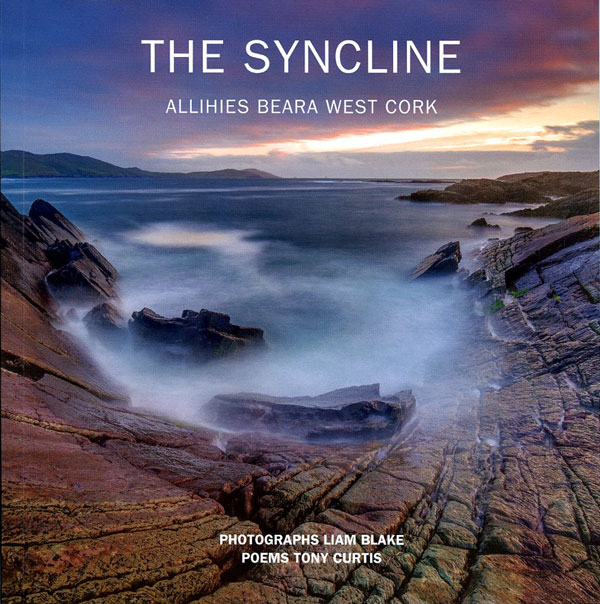
The Syncline - Allihies Beara West Cork
Brand: Real Ireland
64 page, square format 165mm x 165mm, full colour book.
The spectacular landscapes of the West Cork peninsulas with their raw and almost skeletal qualities are very much the product of the underlying bedrock geology of the region. This geology predominantly consists of layered sandstones, siltstones and mudstones of Upper Devonian age that were deposited in a large sedimentary basin, the Munster Basin, 380-360 million years ago. During the Upper Devonian what is now Munster sat on the southern margin of the ancient continent of Laurussia and the sediments that filled the Munster Basin was carried by a series of river systems from uplands, part of the Caledonian Mountain chain, to the north of present-day Munster southwards into the basin. At this time southern Ireland was close to the equator and the climate was very arid. As a consequence, a lot of the iron in the sediment was oxidized resulting in the reddish/purple tinge we see in the rocks today. The bulk of this sediment was deposited by periodic flooding events that laid down the sediment in distinct, laterally continuous sheets. This is what gives the rocks their very apparent layered geometry. Because of the dry, desert like conditions we see very little fossil material in these rocks. Some localities do preserve primitive fish material and to the north, on Valentia Island, we see the preservation of early tetrapod footprints. As the sediments that accumulated in the Munster Basin were buried, they were transformed over time, through the process of lithification, into the sedimentary rocks we see today.
At the end of the Carboniferous Period the Munster Basin was caught up in a global mountain building event, the Variscan Orogeny. The flat lying layered sedimentary rocks of the Munster Basin were compressed from the south by the collision of the Gondwana tectonic plate with the southern Laurussia. This head on collision imparted a strong tectonic fabric in the rocks which was responsible for significant crustal shortening. Ongoing compression eventually led to the sedimentary layers being buckled into a series of roughly E-W aligned geological folds. Folding occurred on all scales from large regional structures responsible for the peninsulas of south west Ireland to smaller meter scale structures that are very evident when looking at West Cork landscapes.
Dt- Pat Mccn
Product Details
On Gifting Black Feathers, 64 page, size 132mm x 200mm
The sculptor Philip McCracken (1928-2021) is a major American artist. Born and brought up in the coastal town of Anacortes, in the Pacific Northwest. He was a child of rivers, mountains, ocean and islands. The combination of his artist’s imagination, his affinity with the natural world, and his ‘Master Craftsmanship’, especially with wood, where other craftsmen said, he could work miracles, made him a unique sculptor. On Gifting Black Feathers is a book of poems drawn from the art and life of this great sculptor.